
Make Them Fear You
Or, Why Despair is a Tool of the Oppressor

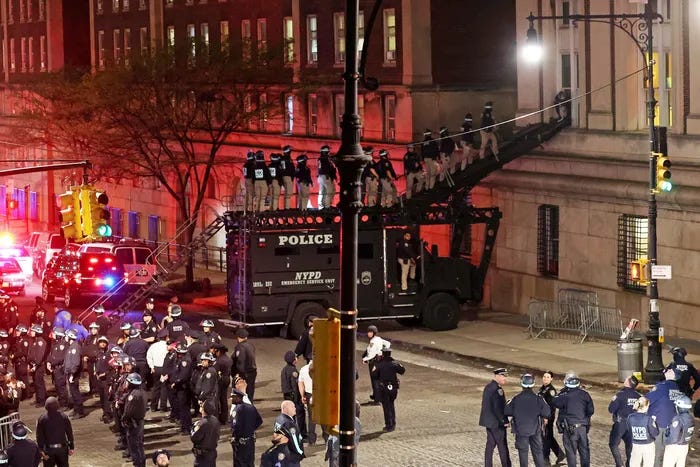
When I saw the NYPD siege ladder at Columbia University I knew this was how the election was going to go. I spent a few days this week in denial after months of certainty, but we can all be excused for moments of weakness.
What went through my head was this: I grew up with the Trumpist hardcore before they had a Trump to rally behind. I remember the Christo-fascist churches, I remember vividly the Christian Zionist banners waving down the aisles. Once it was clear in 2021 that they truly believed the “Big Lie”—that the election was stolen from them—I knew they would churn out more foot soldiers than ever before. In 2016 they were unprepared for power, unprepared to push. In 2020 we were all terrified and in disarray. But I knew that with four years of preparation they would be a force to be reckoned with.
I also knew that the policy of unleashing the jackboot on the very people who you depended on to knock on doors for you was not a good sign. Nor was providing a playbook for mass arrest of protesters. Slandering us as Anti-Semites—while their truncheons were slick with the blood of Jewish students and professors—did not help either. I knew Harris’ one example of showing a spine, “Excuse me! I’m speaking now,” was a very bad sign. We tried to tell them but—she was speaking.

I also knew that our rage at an unpopular war criminal candidate would not be sated by his replacement claiming she would not have done anything different. I scratched my head, “How can you say that, now? You are only here because we demanded a break from that man, that genocidal blowhard, and you say you are in league with him?” Perhaps campaigning with the daughter of Dick Cheney was a bad look. Perhaps spitting in our faces while courting non-existent white Republican women voters for Harris was bad strategy. Perhaps sending Bill fucking Clinton to lecture Palestinian and Lebanese families in mourning for their dead about how, after all, the land belonged to King David, was a bad decision.
This is not 2016. They are prepared. They are funded. They are organized. They are eager. The “adults” are gone. It’s Joe Rogan, and RFK Jr., and Elon apartheid in space now. It’s openly fascistic Peter Thiel providing the funds and the talking points.
The Courts are theirs. The Senate is theirs. The Executive—inflated with dictatorial powers by Bill, George, Barrack, and Joe—is theirs. They looked into our eyes and said they were serious when the trusty propagandists asked, “You aren’t really serious, right?”
But you know what isn’t theirs? Us.
This is not 2016. We mourned then. We groaned and sobbed. And certainly we all did some of that last night—I know I did, I did it during the Spring and Summer and Fall in this shitty little hotel room that the impoverishment of intellectual labor has brought to my life. But this is not 2016.
This is not 2016, the world is different. When the President threatens other nations he will find the post-Covid world of land wars in Europe and Holocausts in the Near East is a very different beast. The global financial system will not sustain a trade war this time. Everyone is already on war footing.
We aren’t alone. This plague is sweeping the liberal capitalist empire the world over. Locked up and broken, it could not deliver on its promises. Locked up and bloodied, the revolutionary spirit could not muster an alternative. So this is what has been birthed. Its’ tortured monstrous form slithering out of the sewers of Reality TV and deeply rooted bigotry, it rears its head and roars.
Liberalism and Nationalism always had an unhappy marriage. Their divorce is almost complete, now. Liberalism is dead, unable to defend itself after decades of trampling on the masses who demand that it live up to its promises. Well now they are done pretending. Nationalism, new forms of fascism often inflected with religious bigotries and TV personalities, is the real ugly face of Capital. Now we can stare it in the face and stop pretending that Kindly Old Joe was anything but a mirage.
Don’t fear, make them fear you. The Psychological Operations of Empire aimed at the colonies in the 1960s called their strategy “privatization”—“the preoccupation of the individual with his personal rather than his social situation.” The opposite of a sociological imagination in which we link our biography with history and social relations. They want that. They want us afraid and alone and apathetic. They want us to watch the trees burn with despair instead of rage. They want us discouraged, not hopeful. They want us to be defeatists, certain of our loss even when we have the numbers to drive them into the deep blue sea. They want apathy—for us to throw up our hands and say it’s all over and done, might as well get what’s mine and tune out.
No.
Make them fear you like they feared Yahya Sinwar. A man who terrified his jailers. He learned the language of his oppressors in prison. He encouraged the weak around him. He was born in prison, and it could not contain him. He died an old man, his arm blown off, facing tanks and soldiers, throwing grenades at genocidaires and sticks at hateful drones. They showed us the footage to demoralize us, but it only gave us heart.
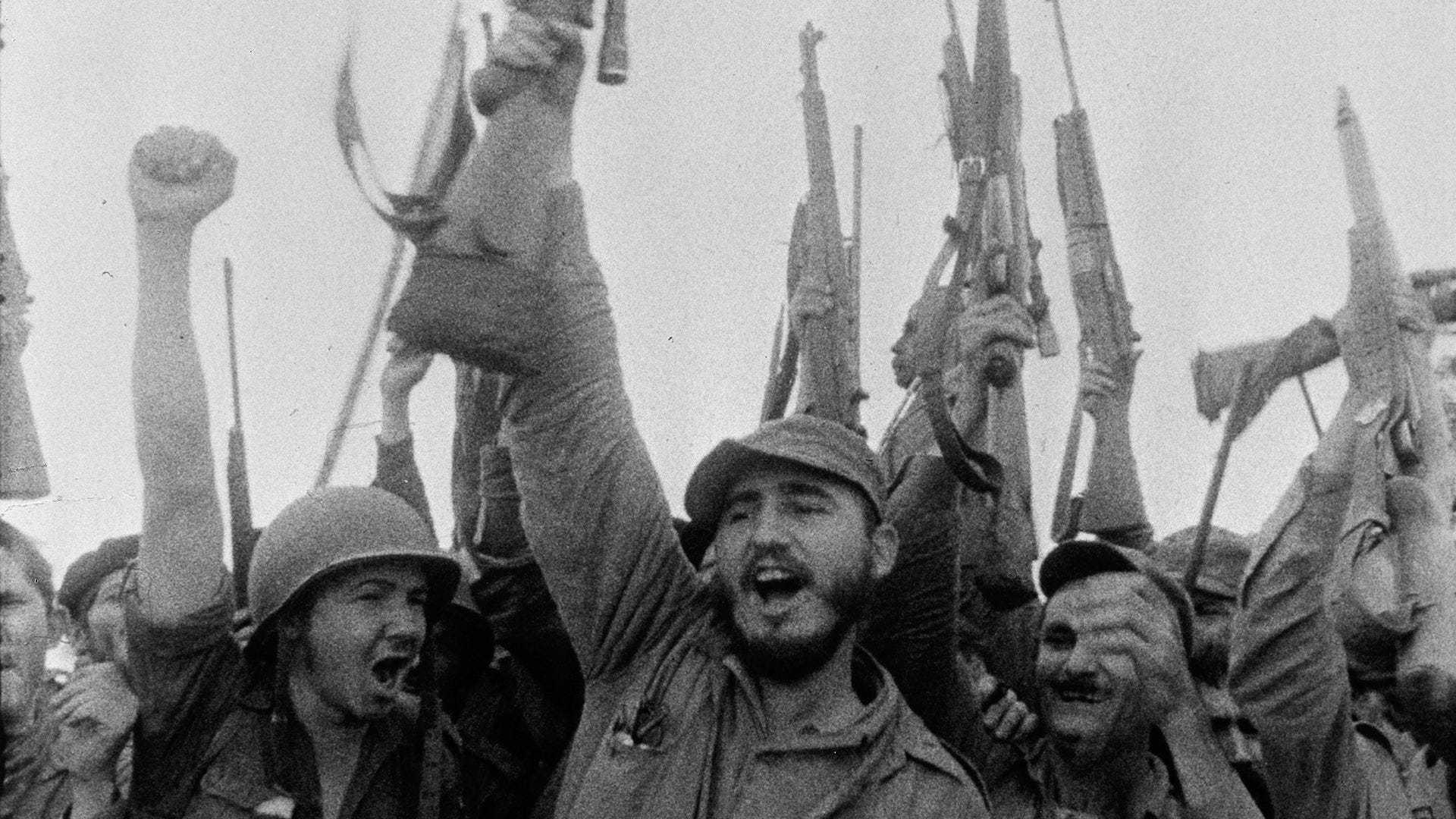
They feared Che would be a greater threat in death. They were right. They feared us then, and they will learn to fear again.
I was a little confused. I'm not sure what you mean by "liberalism." The word "liberal" has different meanings to different people, and it has changed its meaning during the two decades that I've been politically awake. Currently, it seems to me that most people who call themselves "leftists" use the term "liberal" for something that is not good. Holcaust Harris would be an example of today's "liberal." The word "progressive" seems to be following "liberal" -- In 2006, Paul Waldman said that progressives are people who believe "we're all in it together," but in 2015 Hillary Clinton -- the destroyer of Libya -- described herself as "a progressive who likes to get things done." Perhaps the general trend is that bad people expropriate labels that good people have been using. I used to associate "Christian" with the Amish or with Liberation Theology, but in recent years it reminds me more of the Inquisition. Probably I should read your essay a second time.