
A War on Iran

After weeks of goal post moving negotiations and a literal sewage crisis aboard the USS Gerald R. Ford, the United States and the génocidaire settler-colony of Israel have launched a war of aggression against the sovereign nation of Iran. For the first time in decades the US faces an enemy who can shoot back.
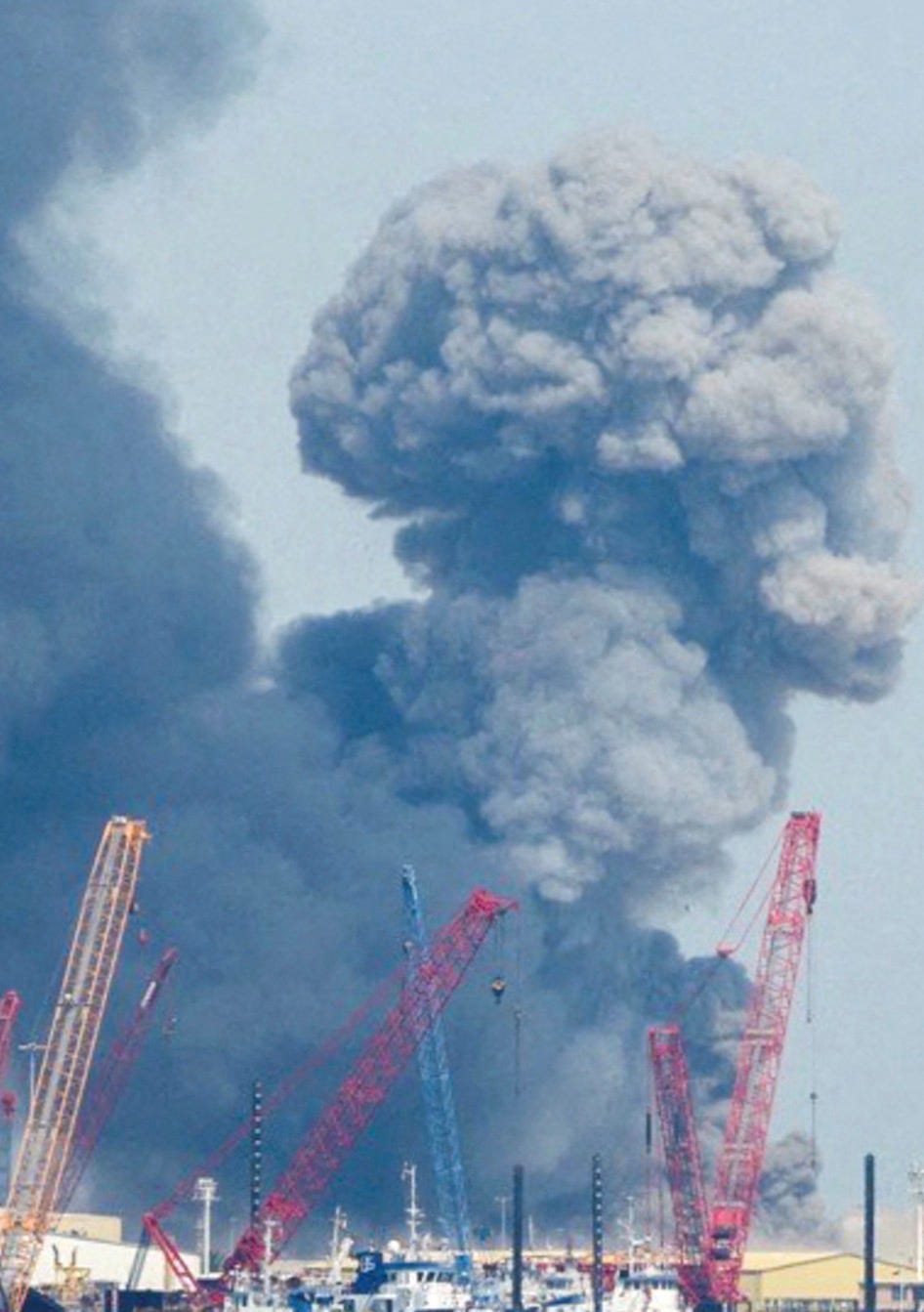
The Iranian government is in dire straits. Years of sanctions following the unilateral withdrawal of the US from the landmark Iran nuclear deal have led to the slow disintegration of its economy. The masses of ordinary Iranians want freedom from their oppressors and the situation has become so desperate that the once-hated son of the Shah now has a social base among some of those pushing for the downfall of the Islamic Republic. By the government’s own admission thousands were slaughtered when Basij milita and police forces opened fire on protesters across the country. Israeli media launched its own psychological operations, claiming credit and promising more support for the resistance in the streets. The truth of their claims aside, the effect was to harden the government’s response. There are rumors of a failed coup which aimed to reduce the Ayatollah to a ceremonial role (which might also turn out to be psychological warfare aimed at stoking such a move). The legitimacy of the regime in Tehran has collapsed in a spectacular way.
And so the US and Israel have decided that now is the time to strike.
It is too early to make sweeping judgements about this conflict. The people of Iran deserve freedom and self-determination. But that is the key here—self determination. Colonial powers always exploit conflicts and divisions within their desired lands. The model that Washington and Tel Aviv are aiming at here is the fantasy of regime change from the air. One can imagine such a scenario working only in very specific circumstances—but those circumstances are not present in Iran.
The destruction of the Libyan government is the model they seem to have in mind. They are stubbornly ignoring the dramatically differences in the two situations. Libya was a country of around 6 million at the time. Further, the uprising against its government split the country into a regional civil war even before NATO countries began bombing. NATO of course was the other key—France and Italy are close neighbors of Libya. Thus, there was proximity for supply lines, an already raging armed conflict, and a relatively contained theater.
Iran is massive. It is a country of 93 million from numerous ethnic backgrounds with high levels of religious diversity and local identity. Iran is a geographic nightmare for any would-be conqueror—it is mountainous, large, and home to a varied climate. Iran is far from any supply lines for US forces, forces which are mostly at sea. The US has depleted much of its munitions stockpile in order to supply Ukraine and Israel. The Iranian government can also dish out devastating blows with its hypersonic missiles and its drones. Targets have been hit already in Bahrain, Qatar, Saudi Arabia, Oman, the UAE, Jordan, Iraq, Syria, and Israel. The masses of ordinary Iranians willing to put their lives on the line to take down the regime have already been dealt a catastrophic blow with the mass killings—it is difficult to imagine how they might, without arms, take on the Revolutionary Guard and Basij militia forces.
Beyond all of this, there is the simple matter that 80% of the American public opposes this war. At least the Bush Administration had the decency to beat the war drums for a whole year before launching its war on Iraq. The dissolution of the war powers of the United States Congress is almost complete—they seem to imagine that only a ground war requires Congressional authorization. But if hundreds of US sailors are killed by cruise missiles that calculus might change. This is rumored to be the Iranian government’s strategic goal: to kill 500 American servicemen and women in order to raise the political cost for the would-be-dictator of Washington.
We have faced a nightmare from this regime in Washington since its election in November of 2024. A cloud of despair, mourning, and deep fear has choked off the sunlight of hope for months. But the political defeats and setbacks of the aspiring dictatorship has been clear for all to see over the past two months. Historically, American Presidents do not fare well when they engage in regime change operations in the Middle East. This was, in fact, a key insight that permitted this boorish brute to make his way to the White House: the Republican primary in 2016 was largely decided by the decision of the now-President to speak the obvious on the issue of the Iraq War. In fact, a number of leftists and anti-war independents imagined the President would be less of a warmonger than the Democratic alternative. Truthfully, the Democratic leadership seems to be eager to support the war while criticizing the President’s authority to wage it without Congress.
For my part, my first “Hands Off Iran” demonstration was in 2006–I have been marching against the prospect of this war for twenty years.
And yet, here we are. Missiles are criss-crossing the Middle East, the Strait of Hormuz is closed, Iranians are dying in droves, and the President announces that some soldiers may die because that is just what happens in war. God help us all.